
A disagreement over religious freedom and same-sex marriage is already emerging as an early issue for the incoming chief justice of the Texas Supreme Court.
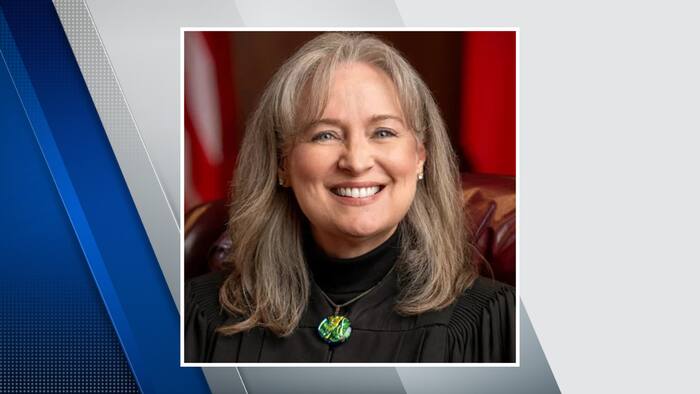
Chief Justice-elect Maggie Ellis, a Democrat elected Tuesday, has expressed opposition to a policy allowing Texas judges to decline officiating weddings that conflict with their sincerely held religious beliefs.
The policy, adopted by the Texas Supreme Court in October 2025, protects judges who choose not to perform certain marriage ceremonies, including same-sex weddings.
Ellis has indicated she wants to revisit those protections, raising questions about whether judges who voluntarily officiate weddings should be required to serve all legally eligible couples.
On Friday, the Plano-based First Liberty Institute criticized her position, accusing the incoming chief justice of undermining religious freedom.
Ellis’s opposition is not new. In a 2025 candidate questionnaire submitted to Stonewall Democrats of Austin, she identified the Texas Supreme Court’s decision as a motivating factor in her campaign.
“When the TXSC issued its order on October 24 of this year stating that judges would not be penalized for refusing to perform same-sex (or other) weddings based on a deeply held religious belief, I found that to be an attack on our community and our Constitution, and I made the decision to run for a seat on that Court,” Ellis wrote.
“We must do what we can within our power to protect our rights and the rights of our community.”
Ellis, who has served on Texas’ Third Court of Appeals since January 2025, campaigned on expanding access to justice and removing politics from the judiciary.
Her opposition centers on a distinction between a judge’s right to decline officiating weddings altogether and a judge’s ability to perform ceremonies for some couples while refusing others.
Under the approach First Liberty says Ellis supports, judges would remain free to stop officiating weddings but could not selectively refuse ceremonies based on religious objections.
First Liberty Institute, a legal organization specializing in religious freedom cases, issued a statement Friday condemning Ellis’s position.
“It’s sad that an incoming Justice’s first public statement is one against religious freedom,” said Kelly Shackelford, the organization’s president, CEO and chief counsel.
“We’ve won in litigation on this very issue. Religious freedom and accommodation are fundamental rights rooted in the history and tradition of America. The new Chief Justice is off to a regrettable start.”
Shackelford said the organization stands ready to defend judges affected by any change to the policy.
First Liberty argues that judges should not be forced to choose between officiating weddings and following their religious convictions.
The organization has previously represented judges involved in disputes over same-sex marriage ceremonies, including a McLennan County justice of the peace whose case helped shape the current protections.
The dispute traces back to Judge Dianne Hensley, a justice of the peace in McLennan County who stopped performing weddings for same-sex couples because of her Christian beliefs.
Hensley continued officiating opposite-sex weddings and developed a referral system directing same-sex couples to other officiants willing to perform their ceremonies for the same price.
In 2019, the State Commission on Judicial Conduct issued Hensley a public warning, finding that her conduct raised concerns about judicial impartiality.
Hensley challenged the disciplinary action, arguing that it violated her religious freedom rights.
The case eventually reached the Texas Supreme Court, which ruled in 2024 that Hensley could pursue certain legal claims against the commission.
Then, on Oct. 24, 2025, the court adopted a new comment to the Texas Code of Judicial Conduct:
“It is not a violation of these canons for a judge to publicly refrain from performing a wedding ceremony based upon a sincerely held religious belief.”
On Jan. 9, 2026, the court issued another decision addressing whether judges could publicly refuse same-sex weddings for moral or religious reasons while continuing to perform opposite-sex ceremonies.
The justices concluded that the judicial conduct provision at issue did not prohibit that practice.
The ruling reinforced the protections that Ellis now wants the court to reconsider.
Despite Ellis’s election, the existing judicial policy remains in effect.
Changing the Texas Code of Judicial Conduct would require action by the court, meaning Ellis could not unilaterally eliminate the accommodation upon taking office.
The issue also does not change the legality of same-sex marriage in Texas.
Same-sex couples have had the constitutional right to marry nationwide since the U.S. Supreme Court’s 2015 decision in Obergefell v. Hodges.
Instead, the disagreement concerns the responsibilities of judges who choose to perform marriage ceremonies as an authorized service.
Ellis’s position raises questions about equal treatment by public officials, while First Liberty argues that the existing policy protects religious conscience.
With Ellis preparing to lead the state’s highest civil court and First Liberty signaling its willingness to challenge any changes, the dispute could become an early test of how the incoming court balances religious liberty and judicial impartiality.


