
Texas voters changed who will hold some of the most powerful offices in state government Tuesday.
Now attention is turning to whether the powers attached to those offices could change, too.
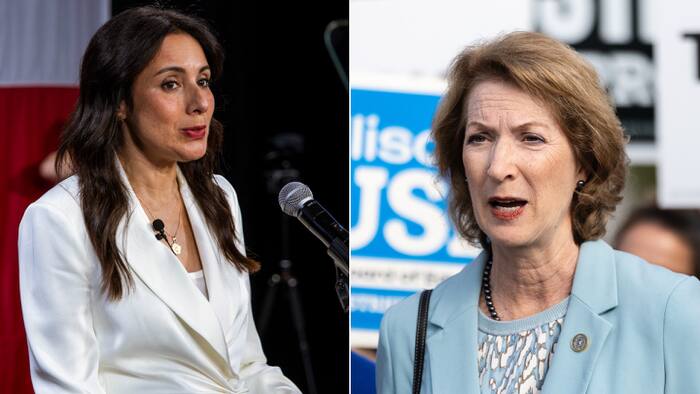
Republicans will retain control of the Texas Senate when lawmakers return to Austin in January, even as Democrats take control of the Texas House and Gov.-elect Gina Hinojosa and Lt. Gov.-elect Vikki Goodwin prepare to take office.
That split is creating an unusual question ahead of the 90th Texas Legislature: How much authority will the newly elected Democratic leaders actually have?
KPRC 2’s Stephania Jimenez asked Scott Braddock, longtime Texas political journalist and editor of The Quorum Report, about two possibilities already being discussed in Austin.
His assessment was strikingly different for each.
SEE: Gina Hinojosa news conference: Texas governor-elect speaks after election win
Republican state Rep. Brian Harrison has asked Gov. Greg Abbott to call lawmakers back to Austin for a special legislative session before Hinojosa takes office.
Harrison wants lawmakers to restrict some of the emergency powers available to the governor, pointing to legislation he previously filed that would place additional legislative checks on disaster declarations and emergency orders.
But Braddock told KPRC 2 he sees little chance of that happening before Abbott leaves office.
“It’s highly unlikely,” Braddock said.
The problem, he explained, starts with attendance.

Texas lawmakers can only conduct legislative business when enough members are present to establish a quorum. Democrats won control of the House in Tuesday’s election but will not formally take control until the new Legislature begins.
If Abbott called a special session before then, Braddock said current Democratic lawmakers could simply decline to show up.
“If the governor was to call right now a special session, guess what? This town would be not exactly filled with Democratic legislators,” Braddock said. “They would not be here.”
He pointed to the 2025 redistricting fight, when House Democrats left Texas in an unsuccessful attempt to block Republican-backed congressional maps by denying the chamber a quorum.
This time, he said, the political circumstances would be reversed.
“They wouldn’t even have to do a big quorum break going to some of the big city,” Braddock said. “They would just stay home and not come in. And that would mean legislative business by law could not be conducted.”
Abbott has not announced plans to call the special session Harrison requested. Other political observers have similarly noted that Democrats could attempt to deny Republicans the quorum needed to advance such legislation.
Braddock said the more consequential fight could happen across the Capitol in the Texas Senate.
Goodwin defeated Republican Lt. Gov. Dan Patrick on Tuesday, making her the first Democrat elected lieutenant governor of Texas since 1998.
But Republicans will still control 19 of the Senate’s 31 seats when the Legislature convenes in January.
That matters because much of the lieutenant governor’s influence over the Senate is not spelled out in state law.
Instead, it comes from the rules senators adopt to govern their own chamber.
Under the current rules, the lieutenant governor has enormous influence over the legislative process, including committee assignments, which committees receive bills and which legislation reaches the Senate floor. The Texas Constitution gives the lieutenant governor some specific duties, including presiding over the Senate, but many of the office’s most powerful tools come from Senate rules.
And those rules can be changed.
Braddock said Republican senators were already discussing that possibility following Goodwin’s victory.
“You have the GOP caucus in the Senate. They met this week, almost an emergency meeting, right, to talk about whether or not they could do that, get rid of the lieutenant governor’s powers,” Braddock said.
Unlike Harrison’s proposal, Senate Republicans would not necessarily need Abbott, the Texas House or a special legislative session to make those changes.
“Most people don’t know this, but it’s not in the law that the lieutenant governor gets to preside over the Senate and set the agenda,” Braddock said. “That’s up to the senators.”
Braddock said he views an effort to reduce Goodwin’s authority as much more plausible.
“It’ll be criticized as a power grab, but I do see that as likely,” he said.
Reports say Republicans will have enough votes to change the chamber rules by a simple majority. No changes have been formally adopted, and reporting about Republican discussions does not mean senators will ultimately vote to strip Goodwin of any specific authority.
MORE: Who are the 4 people leading Texas Gov.-elect Gina Hinojosa’s transition team?
The debate over Goodwin’s authority could have consequences well beyond the lieutenant governor’s office.
Hinojosa campaigned on proposals including sending $1,500 to Texas households, freezing residential electricity rates, ending certain tax breaks for large data centers and returning state-controlled school districts to local control.
She cannot accomplish many of those promises alone.
Major changes would have to pass both chambers of the Legislature, where Democrats will control the House but Republicans will maintain their Senate majority.
The lieutenant governor traditionally plays a major role in determining which bills receive hearings and ultimately reach the Senate floor. Limiting Goodwin’s authority could therefore affect which parts of Hinojosa’s agenda ever reach a vote.
Hinojosa addressed the possibility of Republican resistance during her first post-election news conference Thursday.
“The people of Texas have spoken,” Hinojosa said. “I think it’s important that as elected leaders we respect what the people of Texas have said they want change.”
She said she hopes leaders from both parties do not “get in the way of the progress we can make together.”
Hinojosa also announced a bipartisan transition team Thursday and said her administration would seek to work across party lines.
Texans may not have to wait until January to see where lawmakers plan to focus their attention.
Monday, Nov. 9 is the first day legislators and legislators-elect can pre-file bills for the upcoming session.
The 90th Texas Legislature officially convenes Jan. 12, 2027.
Those early filings could reveal which campaign promises lawmakers are prepared to pursue, what Republican priorities emerge after Tuesday’s election and where the first battles of the new era in Texas government may take shape.
The election changed who holds power in Austin.
The next question is whether lawmakers change the rules governing how that power can be used.


