
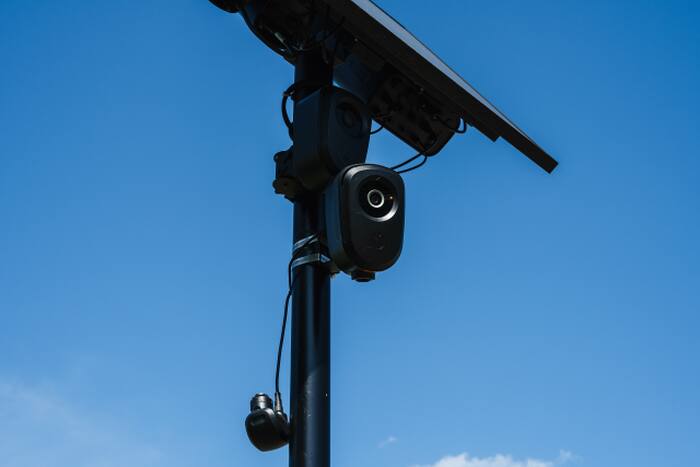
Three bills filed at the Texas Capitol would change how government agencies use automated license plate readers, ranging from a statewide ban to new requirements for warrants and data deletion.
The proposals target technology sold by Flock Safety and other companies that police use to identify vehicles and investigate crimes. Critics have raised concerns about privacy, data sharing and misuse, while supporters say the cameras are a valuable investigative tool.
State Rep. John Bucy’s House Bill 331 would prohibit government entities across Texas from using automated license plate readers. The prohibition would apply to the technology, regardless of the company providing it.
“We need to sit at the table and talk about if there’s ever a good reason to have these,” Bucy told KPRC 2.
Bucy said the technology’s expansion has outpaced protections for Texans.
“It’s been a total violation of our privacy and security and liberty,” he said.
His bill would also allow people harmed by violations to sue, with a prevailing claimant eligible for actual damages or $1,000 in statutory damages, along with court costs and reasonable attorney’s fees.
Two other lawmakers have proposed allowing the technology under tighter rules.
House Bill 847, filed by state Rep. Brian Harrison, would require law enforcement agencies to obtain a warrant or court order to use automated license plate readers. Images and related data could be used only to investigate certain violent crimes.
The bill would also require prompt destruction of data unless it concerns a vehicle, or its registered owner, involved in a qualifying offense or ongoing investigation. Agencies would have to publish annual reports on their use of the technology.
House Bill 763, filed by state Rep. Mary González, would allow specified uses, including felony investigations, missing-person cases and recovering stolen vehicles, while restricting data sharing.
It would generally require government entities to destroy captured plate data within 48 hours. Exceptions would allow longer retention, including when information is evidence in a pending criminal case or subject to certain preservation requests, court orders or warrants.
Conroe resident James Fletes, who opposes the technology, welcomed lawmakers’ attention to the issue.
“I just don’t feel comfortable with the company and I don’t feel comfortable that they’ve set up so quickly such a massive surveillance network across not just Houston, but the entire country,” Fletes said.
Fletes said he and other residents collected nearly 1,700 signatures in an effort to put a proposed surveillance ordinance before Conroe voters in May. The signatures still need to be verified, and a ballot measure has not been secured.
The proposed ordinance would restrict the city’s use of automated license plate readers and other systems that systematically track the public. It would preserve conventional public safety tools, including body cameras and dashboard cameras.
Douglas Griffith, president of the Houston Police Officers’ Union, said removing the cameras would hurt officers’ ability to identify and apprehend suspects.
“They’re one of the best tools that we have for law enforcement,” Griffith said.
He described helping respond to a shooting during FIFA events in Houston, when an officer with Flock access helped locate a suspect’s vehicle within minutes.
Griffith supports safeguards and penalties for improper searches.
“This is strictly for a law enforcement purpose,” he said. “And if you’re not using it for that, there should be strict penalties for that.”
Bucy said he is open to compromise and discussions with lawmakers from both parties about possible safeguards.
“Let’s come up really strict parameters about how we can use them for safety without restricting liberty,” he said.
All three bills remain proposals. They would need to pass the Texas House and Senate before going to the governor.


